Showing posts with label soup. Show all posts

Thursday, December 16, 2010

Baja California Norte and Rancho La Puerta

There’s More in Tecate Than Beer!
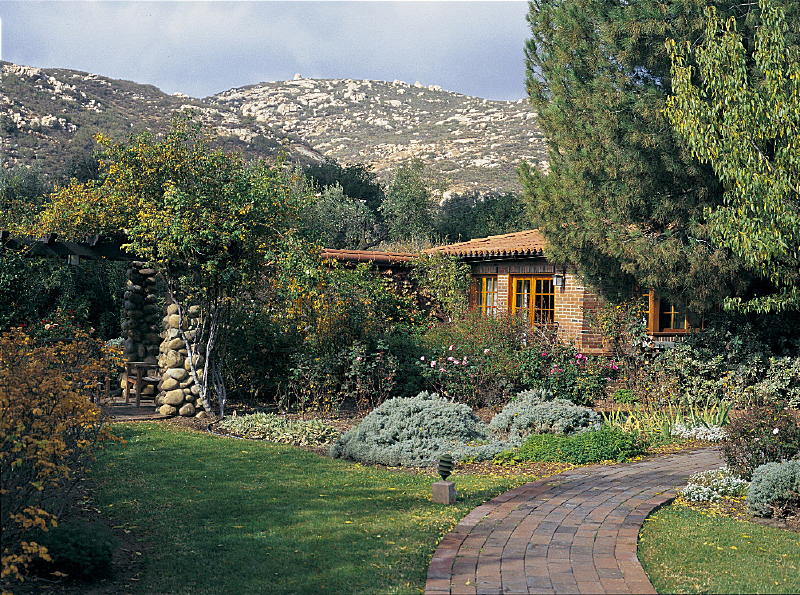
La Puerta rooms yield spectacular views of the mountains that border Mexico and the US.

Baja California, Mexico.  It’s the Mexico you and I didn’t expect… and it’s the Mexico that begins only a few minutes from San Diego, the gateway to Mexico’s surprising northern Baja peninsula.   I’ve enjoyed many visits to the southern part of this peninsula... the state of Baja California Sur, and have loved it.  Cabo San Lucas, Loreto, Todos Santos, La Paz… I keep going back.  A couple of years ago was the last time before this trip that I had entered Mexico through Tijuana (for a conference on real estate investment in Mexico) and I never left my hotel for four days. But this was the first occasion when I have spent much time roaming the “norte”.  In the state that holds the seafood and art mecca of Ensenada, the exciting border city of Tijuana, and the beautiful Valle de Guadalupe, heart of Mexico’s wine country, in the town of Tecate lies Rancho La Puerta Spa and Fitness Resort.  I was actually in Baja California on a culinary quest to learn more about the current style of northern Baja California/Mediterranean fusion cooking in this area, specifically, Tijuana… but more on that in another article. I lost my focus!  Plenty of interesting food to write about in Tecate, too… especially here in the world capital of taco stands!  I find it hard to pass up a taco stand in Tecate.
Taco stands dot the streets in Tecate

Life in Tecate revolves around their most prominent business, the Tecate Brewery.
Being male, my definition of a “spa” was a facility of a few thousand square feet nestled in a luxury resort that my wife went to while I was playing golf… but I learned that I was thinking “day spa”.  Wandering along the perfectly manicured, yet natively natural pathways through the 3000 acres of this, the mother-of-all-destination-spas, I was amazed that the 2010 Travel & Leisure Reader’s Choice as the World’s Best Destination Spa had escaped my radar.   Further confounding me was the fact that this spa has been here,   an hour from San Diego, in the town of Tecate,  Baja California, Mexico since 1940.
The dining hall at La Puerta is in a comforting natural setting.

Even the art at Rancho La Puerta reminds guests to slow down and reflect.

Founded by Edmond and Deborah Szekely, what is billed as the world’s first destination fitness resort and spa grew to become the premiere multi-day vacation destination spa in the world.  Rancho La Puerta offers world-class landscaped gardens, an organic farm, internationally known cooking school, and mountainsides and meadows of great hiking/walking experiences.  Not at all a “day spa”, but a sustainable paradise that, with a stay of a few days, guides guests toward a positive lifestyle change with focus on fitness, healthy diet,  and the relaxation that comes from the complete luxury spa experience.  What a nightmare… here I, a travel blogger/writer, am in this place without Sally and I have to write something about it that she will certainly read. Maybe I should think about playing it down?

Most of the facilities and lodgings are sprinkled amidst world-class gardens and vineyards.  Probably the world’s first “eco” resort, the Ranch practices sustainable organic gardening and resource conservation, and leads the way in environmental protection and education efforts in the region.  Within walking distance, their organic farm, Rancho Tres Estrellas, grows acres of the healthy fare guests feast on daily.  They produce over 115 different organic vegetables, fruits and herbs for bountiful seasonal preparation. As a food writer, I am trying to figure a way to extend my stay!
Slowly walk the labyrinth to excercise your spacial problem solving skills.
Activities at La Puerta include walks, hikes, Pilates, cooking instructions (I always do this everywhere I go), dance (I always do this when my wife makes me), golf (YAY), tennis, volleyball, swimming, yoga, quiet reflection… or absolutely nothing (YAY)!  I took a pre-dawn walk through the farm with kitchen manager, Salvador Tinajero, who was out chosing the seasonable organic produce that’s ripe and ready for today’s meals.  It wasn’t special treatment, either… it’s a regular activity for guests.
Salvador Tinajero, the farm manager,
harvests produce for the day's menu.

Birding is spectacular, and another reason to keep quiet to Sally, formerly with the Houston Audubon Society (Lewis’ Woodpecker, Chipping Sparrow, Ruby-Crowned Kinglet, Orange-Crowned Warbler, Lesser Goldfinch, Spotted Towhee, California Thrasher, Phainopepla, and more… they list over 180 species on their website)  and hikes may focus on geology and wildlife, or merely oneself.  Strolling through colorful lavender and fragrant fields of sage and Artemisia, I scared up bobcats, gray foxes, rabbits, ground squirrels, coyotes, raccoons and prairie dogs. When looking skyward, golden eagles, Swaison’s hawks and turkey vultures were soaring in search of the small game that scurried about in advance of my footsteps.  I tried a walk through the labyrinth to exercise my spatial problem-solving skills. Didn’t work… but I understand it does for others.
The beautiful setting keeps you from staying in your room at La Puerta.

Always visible is the beauty of Mount Kuchumaa, a 3800 foot high peak which the indigenous Kumeyaay tribes people knew as the "exalted high place."  Occupying Baja California Norte for as long as 12,000 years, they viewed Kuchumaa as the womb of the world, from which all creation came.  Only shamans were allowed on the summit of the mountain, which was considered a place of initiation for spiritual leaders, while the valleys, meadows and woodlands below were gathering places for all.  Having recently returned from Chiapas, I was mindful of my constant obsession with the Maya and this trip drove home that there are so many diverse indigenous root paths running throughout Mexico. It’s not all about the Maya and the Aztecs.

Acres of seasonal produce grow to serve the guests of  Rancho la Puerta.

The spa’s farm is one of the most important features of La Puerta and the part around which much of the healthy lifestyle revolves.  The food here is spectacular and the key words are “local” and “organic”. Menus are planned around the seasonal produce from the farm and locally caught seafood.  Wines are all from Baja California’s wine country and are locally produced.  While La Puerta is not on the coast, it is near the Pacific coast town of Ensenada. Several times a week, buyers from La Puerta start the day at Ensenada's Mercado Negro… an open air seafood market that rivals the huge seafood markets in the Mediterranean… then they rush back to the kitchen with fresh whole fish, such as mahi mahi (Dorado here in Mexico… and no easy  feat to haul big ones like I have caught of the Pacific coast of Mexico), tilapia, grouper, yellowtail and red snapper  to be carved by La Puerta’s expert chefs into the day’s “catch” on the menu.  All dishes are complemented by the freshest ingredients such as extra virgin olive oil, organic peanut butter, nuts and seeds.  Menus are planned with the recommendations of Walter C. Willett, M.D., from Harvard's Graduate School of Public Health, author of Eat, Drink and be Healthy.

Would it be a spa without offering expert massages to begin (or end) your day?

As a true destination spa, rates and the plans are for weeklong stays, starting and ending on Saturday and can even include transportation to and from the San Diego airport.  There are three organic gourmet meals a day and snacks including a smoothie bar, juices, soups, and vegetables, etc.   All beverages with meals are included, also.  Guests have full roam of all fitness facilities, the spa, swimming pools, and the library and laundry facilities.
It's not hard to figure why this La Puerta hiker is smiling

An example of how much fun exercise can be is a dance class at La Puerta.

To illustrate the size and scope of La Puerta, it is interesting to note that there are approximately 50 different scheduled group classes per day, with up to five choices of activities per hour including guided hikes and walks and workshops.  There are spa and fitness concierges to customize programs and help you gain ease with the many proffered services.  I found that nightfall doesn’t necessarily mean bedtime, as there are evening programs and entertainment.  There are some a la carte items such as spa services, personal one-on-one training, and cooking classes or demonstrations at La Cocina Que Canta cooking school.
Cooking classes in La Cocina Que Canta teach healthy cooking with
local organic ingredients.

Rates for a weeklong stay at La Puerta range from approximately $3000 to $4000 per person.  Tipping at La Puerta is truly optional… there is NO service charge.   I found that made me want to tip, though.  Clever.

By the way, should you elect to use the available pickup from the San Diego airport and the return to same at the end of your visit, you will find that the infamous hour-long waits at the U.S./Mexico border are not to be suffered by you.  Mexico is heavily pushing medical tourism and that includes the ability of facilities like Rancho la Puerta, as well as hospitals and clinics, to drive you right up to the border in a special lane bypassing the long lines of cars awaiting inspection to cross to the U.S.!
I promise you, this will not be a vacation from which you will have to recuperate.


Rancho La Puerta Fitness Resort and Spa
U.S. Business Office
11696 Sorrento Valley Road, Suite 203
San Diego, CA USA 92121
858-764-5571 direct line
U.S. Toll Free:  1-800-443-7565
www.rancholapuerta.com
www.discoverbajacalifornia.com
www.ensenada.com
www.tecate.com

Recipes
I brought back recipes of a couple of the delicious healthy dishes served at La Puerta and offer them for you to try at home. Butternut Squash Soup with Caramelized Apple and Rancho la Puerta Baked Vegetable Eggrolls with Ginger Plum Dipping Sauce. Hope you enjoy tring these!


Butternut Squash Soup with Caramelized Apple

La Puerta's rich butternut soup is made from squash freshly harvested on-site.


Thursday, August 19, 2010

Cobá, a Day Trip from Cancun

Swimming in cave cenotes is an activity offered by several adventure expedition
companies in the Tulum/Cobá area. Photo by Lori Federico
Cancun is far more than the close-by exciting destination that we all read about in the travel magazines (and my blog, of course). It’s far more than the tiny village that I watched grow into a mega-resort since my first visit 34 years ago. It is the ultimate base in Mexico for exciting “day trips”. So, anticipating what this “day trip” would offer, I awaited the van to transport several other visitors and me into the Yucatecan jungle, expecting an Indiana Jones-type adventure.

How indeed would lunch, in part to be cooked in a bucket on an open fire in the jungle, compare with my posh Cancun hotel breakfast in bed?

Actually, it is one of myriad of day-trips available to broaden the Cancun travel experience. The van pulled up on time, bearing our trim, very fit jungle guides. Together, we motored south along the Caribbean through the Riviera Maya. At Tulum, we headed west, deep into the verdant jungles of the state of Quintana Roo.
A lazy Mexican street dog is interested in Altournative’s jungle van.

The AllTourNative van arrived and I shared my cup of coffee with our sleepy-eyed guide, Jeanette, and we hit the road in the direction of Tulum. Good roads made the two-hour ride into the jungle easy and comfortable, and the informative conversation prepared me for my day’s experience.

A Hanal Pixán altar is offered to a Maya ancestor.     
We arrived in the little Maya village of Cobá comfortably after sunrise and met the village elders. Mario then led us on a brief walk. Wild turkeys, chickens and friendly street dogs (God help me… I love Mexican street dogs) lazily stepped out of our path through and around Cobá (named and inhabited by descendants of the ancient Maya archeological site that we would visit later). We visited during the weekend of Hanal Pixán, an ancient purely Maya celebration unique to the Yucatan, similar to El Dia de los Muertos (the Day of the Dead) which is really a Mestizo event celebrated more in other regions of Mexico. Inhabitants busily competed in building spectacular altars honoring their ancestors. The stop and the short tour delayed our rappelling and zip-lining, but were worth the time.

Our wanderings soon ended atop a cliff, nature’s wall at a jungle ravine. There, our eyes slid down a long rope to a clearing near a small pool of water. The rope was about the only way to get down there alive. When Mario asked who would slide first, dead silence screamed back at him from the 30-somethings in our group. Deciding that Alltournative had nothing to gain by publicly killing off travel writers, I stepped to the edge of the cliff, embraced technique instructions, then heroically stepped off backwards, slid effortlessly down the rope and landed on my feet. Amazing. I was followed quickly by the others.

All down, we followed a long trail to a tall wooden platform high in the jungle canopy. A long cable extended beyond sight through the tree tops to a landing pad. Again, Mario asked, “Who’s first?” Again, no one said a word. It was up to me. I figured “I’ve had a good life… why not?” I stepped up and climbed into the safety harness, then suddenly rushed along a sturdy cable through the treetops. My seemingly-super speed slowed as the cable took an upward turn and I enjoyed a comfortable landing. Another “daring” maneuver completed, I found my prior anxiety unwarranted. I would attempt to be the first for everything from now on!

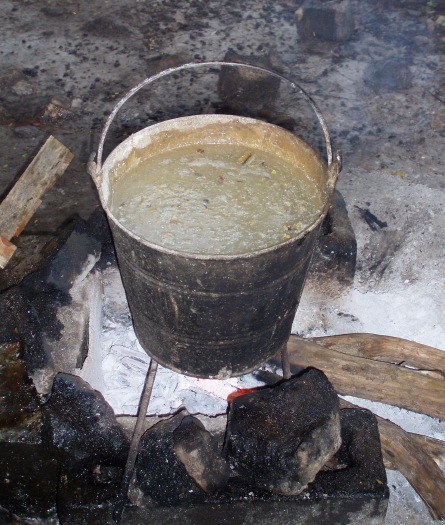
A bucket of corn kernels boils over a campfire 
in preparation of lunch.  
Hungry and tired from jungle commando tactics, we headed to the primitive outdoor dining room set up to feed the village’s guests. Ready and waiting, the aromas of these rich, colorful Maya-rooted dishes were mouthwatering. Just outside the dining area, a bucket of crushed corn kernels in water was bubbling away on a campfire. Instead of tortillas, this thick corn mush is spread on a hot cooking surface to make empanadas and other traditional dishes.
Achiote, grown in every village yard, liberally provides food with a very light seasoning and a rich, dark, red color. Chicken with achiote, a Cobá favorite, quickly became mine, too.


Achiote Chicken is prepared for guests of the Maya village, Cobá  
We all enjoyed both the traditional foods and the respite in preparation for our next adventure.

Reluctantly re-boarding the van, we left the road for a jungle lagoon a quarter mile away. Jostling around on the bumpy dirt vehicle path, I quickly understood why the van had a few dents.

Kayaking through a jungle canal is on the agenda
We reached piers jutting out into the jungle lagoon… a man-made cut for navigation in colorful kayaks through dense vegetation. Drenched from the steady rain that had increased from a morning drizzle, we soon left the kayaks for a steep muddy path to the mouth of the cave. A shaman in a shelter at the cave’s entrance consecrated the group and let the spirits know that we were coming and meant them no harm. After some chanting and burning of incense, we thanked the shaman for his ritual and headed toward the cave opening, noticing for the first time that the shaman had a tip jar.
Achiote is grown in the yards of many families
 in the Maya village of Cobá

Crawling feet-first on hands and knees about 15 feet through a narrow passageway, we came to wooden stairs we could follow over 100 feet down into the darkness to what turned out to be a deep, beautiful, clear cave cenote. I heard a splash and saw guide Jeanette swimming in the cool water. Before long, we all refreshingly joined her, then, headed back to the van to bid adios to the Cobá area. Driving back into the jungle on a secondary road, we drove through exotic terrain. Colorful parrots flew everywhere. Spider monkeys replaced dogs as household pets. Jaguars, much revered, held to their jungle safety… and, thankfully, we saw none (but assumed that they were there, as they are protected by the Mexican government).

This temple at Cobá is the second tallest in the Yucatan peninsula.  
An hour later, we arrived at the ruins of the ancient Maya city and village namesake of Cobá, one of the oldest Mayan architectural sites on the Yucatan peninsula. Its name meaning “waters stirred by wind”, Cobá thrived during the Classic period (600-900 A.D.), yet may have been previously inhabited for as much as 1,000 years.

The Observatory
A local guide walked us through the first group of buildings (Grupo Cobá) as far as the ritual ball court. Some of us rented bicycles, riding a gravel road a quarter-mile into the jungle to see (and for me… to climb) the main pyramid (the peninsula’s second tallest) and to view the well-preserved observatory.

As dusk quickly approached, we headed back in the van to the 21st century luxury of our Cancun hotel after a full day of adventures that we thought Indiana Jones would have enjoyed and envied.

The well-worthwhile day (12 hours-plus) costs about $120 per person, including lunch, experienced guides and transportation.
For more information, see:
http://www.alltournative.com on the Internet.
http://cancun.travel/en/

It would seem that this would be the perfect place to offer a recipe for an achiote chicken dish, but I just posted one for Pollo Pibil in my last article on Uxmal. Refer to it if the idea of the achiote chicken interests you… however, my resident expert on dishes typical to the Yucatan is Chef David Sterling of Los Dos Cooking School in Merida. He suggests that you try to cook outside of the Maya box and prepare a Crèma de Aguacate. Not truly Mayan, as most of the ingredients are post contact, but it is popular on the peninsula.


CREMA DE AGUACATE
Creamy chilled avocado soup

Monday, March 22, 2010

Summer Solstice at Chichen Itza


Crowds gather throughout the day at El Castillo (the castle) in anticipation
of the maximum visual effect of the Solstice at around 5:30 PM


One of Mexico’s best-known images is the Temple of Kukulkan (the Feathered Serpent) , or El Castillo, in the ancient Maya city of Chichen Itza. Translated into English from the Mayan language, Chichen Itza means “at the mouth of the well of the Itza”. This Unesco World Heritage site was among the most important Mayan political, commercial and religious centers of the classic period (750-1200 A.D.). I’ve visited this site many times over the years, but it draws more visitors during the Winter and Summer Soltices than any other time of the year. Although I have visited at all times of the year, I thought that a post after the spectacle would be useless to those who might like to go there and see it in person. So, I’m giving you all plenty of time to plan a trip to the area

On the Summer Solstice at approximately 5:30 PM (when I took the photo with this post) the shadow of the Feathered Serpent has slithered down the steps to the base of the pyramid and the illusion is at its fullest.

The most notable structures at Chichen Itza include El Castillo “the castle”; the Observatory; the Temple of the Warriors; the Sacred Cenote (the Well of Sacrifice, where virgins, adorned with gold jewelry, were thrown in as offerings to the Gods); and the Great Ballcourt.

In 2010, the Winter Solstice will occur in the Southern Hemisphere on June 21st and the Summer Solstice will occur on December 21st. Check for specific times of the peak of the experience, as the times are different every year. I usually fly into Merida for a visit to Chichen Itza, but it is also around a 2 ½ hour drive from Cancun. A side trip to the small town of Vallalodid is nice and I enjoy eating there.

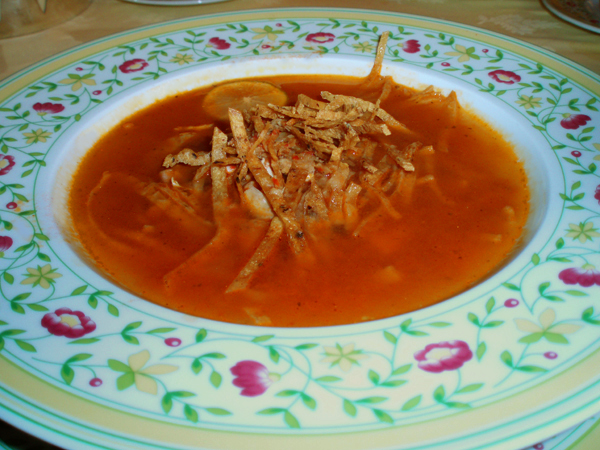
Speaking of eating… no trip to the Yucatan peninsula is complete without savoring the delicate broth in Yucatan Lime Soup (or Sopa de Lima). Here is my Americanized version:


Sopa de Lima